|
16-05-2012, 05:56
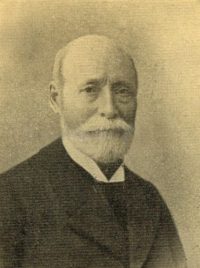
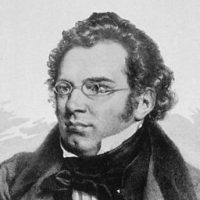
Giovanni Battista Pergolesi
(4 January 1710 – 16 March 1736) was an Italian composer, violinist and organist.Born at Iesi, Pergolesi studied music there under a local musician, Francesco Santini, before going to Naples in 1725, where he studied under Gaetano Greco and Francesco Feo among others. He spent most of his brief life working for aristocratic patrons like the Colonna principe di Stigliano, and duca Marzio IV Maddaloni Carafa. Pergolesi was one of the most important early composers of opera buffa (comic opera). His opera seria, Il prigionier superbo, contained the two act buffa intermezzo, La Serva Padrona (The Servant Mistress, 28 August 1733), which became a very popular work in its own right. When it was performed in Paris in 1752, it prompted the so-called Querelle des Bouffons ("quarrel of the comic actors") between supporters of serious French opera by the likes of Jean-Baptiste Lully and Jean-Philippe Rameau and supporters of new Italian comic opera. Pergolesi was held up as a model of the Italian style during this quarrel, which divided Paris's musical community for two years. Among Pergolesi's other operatic works are his first opera La conversione e morte di San Guglielmo (1731), Lo frate 'nnamorato (The monk in love, 1732, to a text in Neapolitan language), L'Olimpiade (31 January 1735) and Il Flaminio (1735). All his operas were premiered in Naples, apart from L'Olimpiade, which was first given in Rome... For more info and complete Article see Full Story. 15-05-2012, 04:44
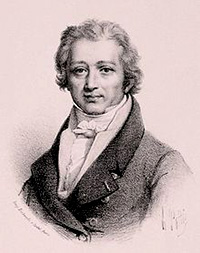
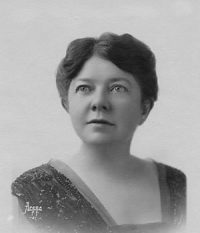
Friedrich Daniel Rudolf Kuhlau
(11 September 1786 – 12 March 1832) was a German-Danish composer during the Classical and Romantic periods. He was a central figure of the Danish Golden Age.He is immortalized in Danish cultural history through his music for Elverhøj, the first true work of Danish National Romanticism and a concealed tribute to the absolute monarchy. To this day it is Kuhlau's version of this melody which is the definitive arrangement. During his lifetime, he was known primarily as a concert pianist and composer of Danish opera, but was responsible for introducing many of Beethoven's works, which he greatly admired, to Copenhagen audiences. Considering that his house burned down destroying all of his unpublished manuscripts, he was a prolific composer leaving more than 200 published works in most genres. Kuhlau was born on 11 September 1786 just south of Lüneburg in Uelzen district of Lower Saxony. At the age of seven, he lost his right eye when he slipped on ice and fell. His father, grandfather, and uncle were military oboists. Even though Kuhlau was born to a poor family, his parents managed to pay for piano lessons. Later he studied the piano in Hamburg where he also had his debut as a pianist in 1804. In 1810, he fled to Copenhagen to avoid conscription in the Napoleonic Army, which overwhelmed the many small principalities and duchies of northern Germany, and in 1813 he became a Danish citizen... For more info and complete Article see Full Story. 14-05-2012, 06:56
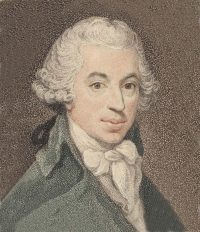
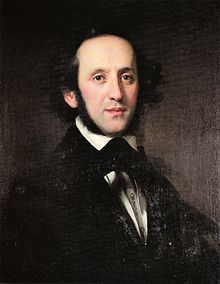
Henry Purcell
( /ˈpɜrsəl/; 10 September 1659 (?)– 21 November 1695), was an English composer. Although incorporating Italian and French stylistic elements into his compositions, Purcell's legacy was a uniquely English form of Baroque music. He is generally considered to be one of the greatest English composers; no other native-born English composer approached his fame until Edward Elgar.Purcell was born in St Ann's Lane Old Pye Street, Westminster. Henry Purcell Senior, whose older brother Thomas Purcell (d. 1682) was also a musician, was a gentleman of the Chapel Royal and sang at the coronation of King Charles II of England. Henry the elder had three sons: Edward, Henry and Daniel. Daniel Purcell (d. 1717), the youngest of the brothers, was also a prolific composer who wrote the music for much of the final act of The Indian Queen after Henry Purcell's death. Henry Purcell's family lived just a few hundred yards west of Westminster Abbey from the year 1659 and onward. After his father's death in 1664, Purcell was placed under the guardianship of his uncle who showed him great affection and kindness. Thomas was himself a gentleman of His Majesty's chapel, and arranged for Henry to be admitted as a chorister. Henry studied first under Captain Henry Cooke (d. 1672), Master of the Children, and afterwards under Pelham Humfrey (d. 1674), Cooke's successor. Henry was a chorister in the Chapel Royal until his voice broke in 1673, when he became assistant to the organ-builder John Hingston, who held the post of keeper of wind instruments to the King... For more info and complete Article see Full Story. 14-05-2012, 04:59
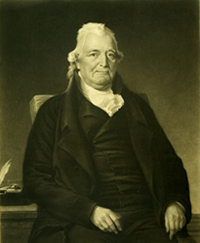
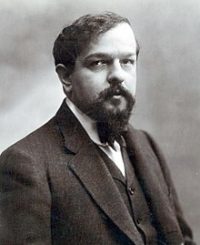
Gregorio Allegri
(1582 – 17 February 1652) was an Italian composer of the Roman School and brother of Domenico Allegri; he was also a priest and a singer. He lived mainly in Rome, where he would later die.He studied music as a puer (boy chorister) at San Luigi dei Francesi, under the mastro di capella Giovanni Bernardino Nanino, brother of Giovanni Maria Nanino. Being intended for the Church, he obtained a benefice in the cathedral of Fermo. Here he composed a large number of motets and other sacred music, which, being brought to the notice of Pope Urban VIII, obtained for him an appointment in the choir of the Sistine Chapel at Rome with the contralto role. He held this from 6 December 1629 until his death. As Andrea Adami wrote, in character, Allegri was regarded as singularly pure and benevolent. Among the musical compositions of Allegri were two volumes of concerti for five voices, published in 1618 and 1619; two volumes of motets for six voices, published in 1621; an edition of four-part sinfonia; five masses, two settings of the Lamentations of Jeremiah, as well as numerous motets which were not published in his lifetime. He was one of the earliest composers for stringed instruments, and Athanasius Kircher has given one specimen of this class of his works in the Musurgia. Most of Allegri's published music is in the more progressive early Baroque concertato style, especially the instrumental music. However, his work for the Sistine Chapel is descended from the Palestrina style, and in some cases strips even this refined, simple style of all ornament. He is credited with the earliest string quartet... For more info and complete Article see Full Story. |


(4 January 1710 – 16 March 1736) was an Italian composer, violinist and organist.
(11 September 1786 – 12 March 1832) was a German-Danish composer during the Classical and Romantic periods. He was a central figure of the Danish Golden Age.
( /ˈpɜrsəl/; 10 September 1659 (?)– 21 November 1695), was an English composer. Although incorporating Italian and French stylistic elements into his compositions, Purcell's legacy was a uniquely English form of Baroque music. He is generally considered to be one of the greatest English composers; no other native-born English composer approached his fame until Edward Elgar.
(1582 – 17 February 1652) was an Italian composer of the Roman School and brother of Domenico Allegri; he was also a priest and a singer. He lived mainly in Rome, where he would later die.